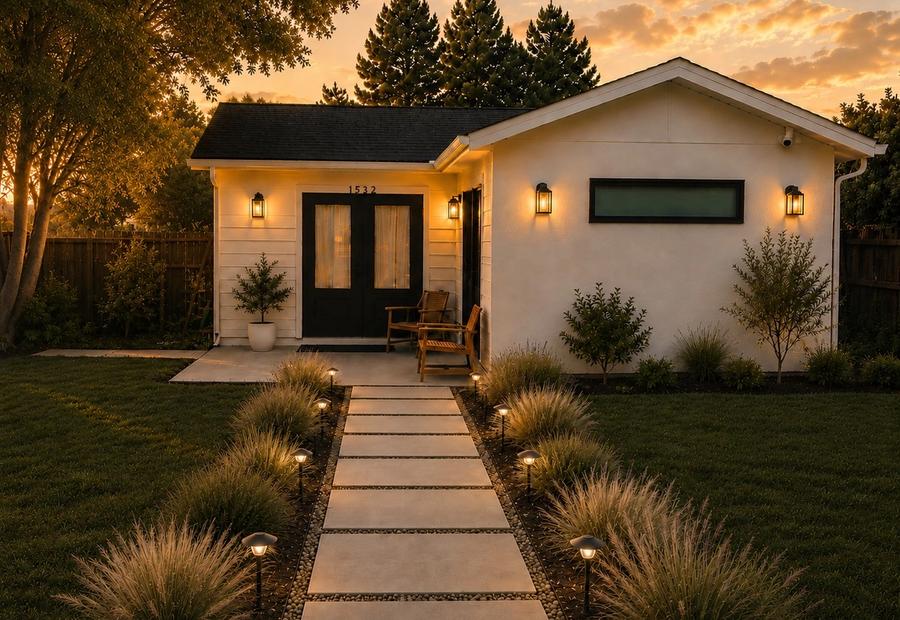
"How much does an ADU cost?" is the first question almost everyone asks, and the honest answer — "it depends" — is deeply unsatisfying. So let's make it useful. The cost depends on a knowable set of factors, and once you understand them, you can build a realistic budget for your own project instead of staring at a scary, vague number.
Read the numbers as a frame, not a quote
Every figure below is a California-market estimate meant to show you how the pieces fit together. Real costs swing with your city, your lot, your finishes, and the month you build. Treat this as a way to think — then get a real number from a feasibility review.
The headline range
For a new detached ADU, most homeowners land somewhere between $250 and $450 per square foot, all-in. A garage conversion can come in lower because the structure already exists; a high-end detached unit on a difficult lot can climb higher. Translated into whole projects, a typical range looks like this:
Illustrative all-in cost ranges by ADU type and size
| ADU type | Typical size | Ballpark all-in cost |
|---|---|---|
| Garage conversion | 400–600 ft² | $120k–$200k |
| Attached new build | 500–750 ft² | $200k–$320k |
| Detached new build | 600–900 ft² | $250k–$450k |
| Detached, premium finishes | 800–1,200 ft² | $400k–$600k+ |
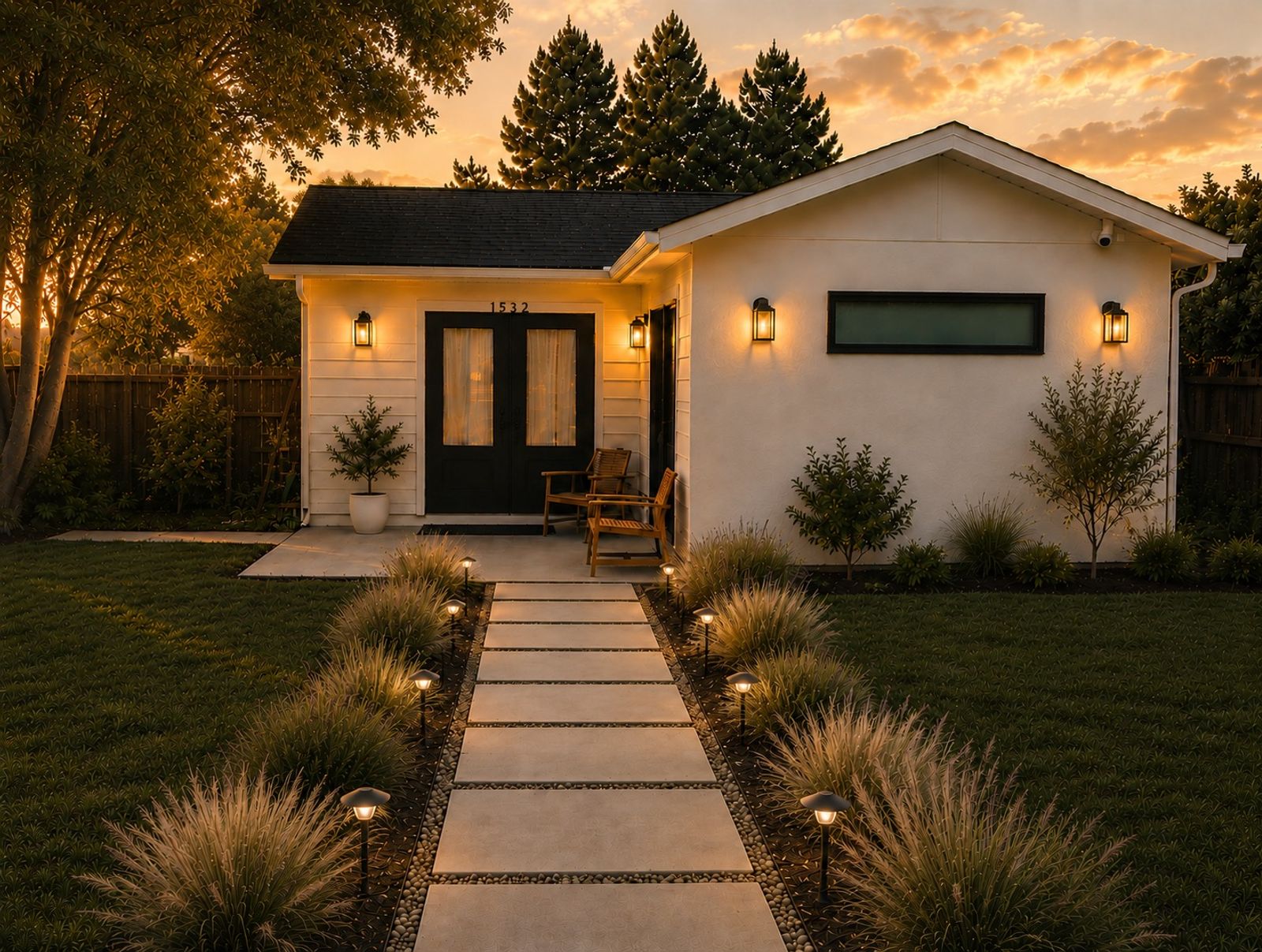
Where the money actually goes
The all-in number is really a stack of smaller numbers. Knowing the stack is what lets you control the total. Here's roughly how a detached new-build budget tends to divide up.
Rough breakdown of a detached ADU budget
| Category | Share of budget | What it covers |
|---|---|---|
| Design & engineering | 8–12% | Architectural design, structural engineering, Title 24 energy calcs |
| Permits & fees | 5–10% | City permits, plan check, school & impact fees, utility connections |
| Site & foundation | 10–15% | Grading, foundation, drainage, site prep |
| Framing & shell | 15–20% | Structure, roof, windows, exterior cladding |
| Systems (MEP) | 15–20% | Plumbing, electrical, HVAC, and utility runs to the unit |
| Interior & finishes | 20–30% | Kitchen, bath, flooring, cabinetry, fixtures, paint |
| Contingency | 10–15% | The buffer for surprises — never skip this |
The five choices that move the number most
If you want to influence the total, these are the levers that matter — far more than the color of the tile.
- New build vs. conversion. Reusing an existing garage shell skips the most expensive structural work. If you have a sound detached garage, a conversion is almost always the cheapest path to a unit.
- Utility connections. How far your ADU sits from existing sewer, water, and electrical service is a hidden swing factor. A unit near the main house's connections is cheaper; one at the back of a deep lot may need long, costly runs and possibly a panel upgrade.
- Site conditions. Flat, accessible, well-drained lots are cheap to build on. Slopes, poor soil, mature trees, and tight access for equipment all add cost before a single wall goes up.
- Size and layout efficiency. Cost scales with square footage, but a smart layout gets more usable home out of fewer feet. Stacking the kitchen and bath on a shared plumbing wall, for example, quietly trims the budget.
- Finish level. The same floor plan can be finished like a rental or like a boutique home. Finishes are where budgets blow up or hold — and where good design earns its keep by spending where guests notice and saving where they don't.
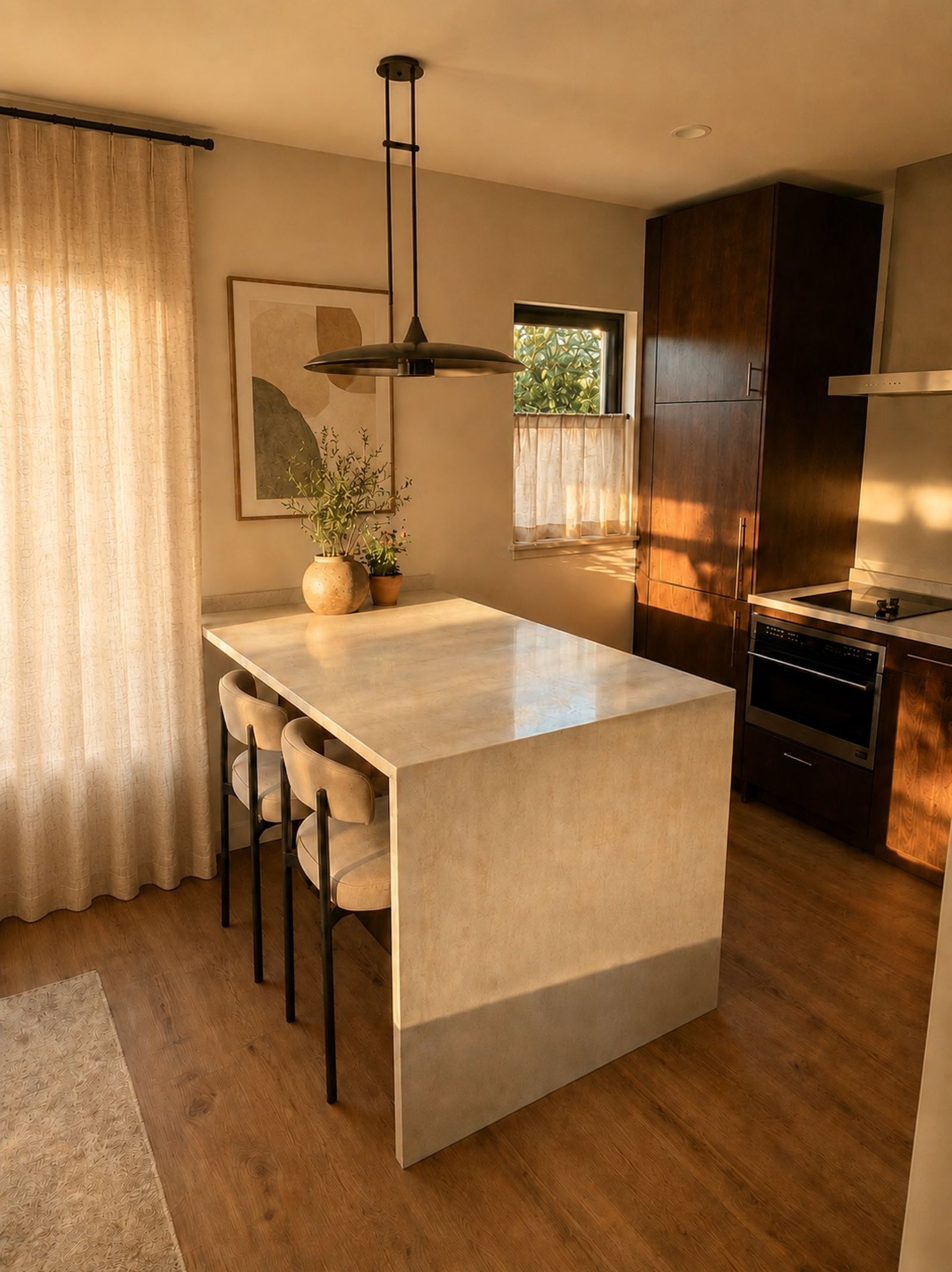
The costs people forget
Sticker shock usually comes from the line items that aren't in the construction quote. Budget for these from the start:
- Soft costs — design, engineering, surveys, and permit fees, which together can run 15–25% on top of bare construction.
- Utility upgrades — a heavier electrical panel or a separate meter, if your project needs one.
- Landscaping and the path to the door — the unit doesn't rent well if you can't get to it gracefully.
- Financing costs — interest on a construction loan or HELOC during the build.
- Contingency — plan for 10–15% you hope not to spend. Projects that skip this are the ones that stall.
A budget you trust beats a budget that's low
The cheapest-looking bid is rarely the cheapest project. A realistic budget with a real contingency is what gets you to the finish line without a painful mid-build conversation. We'd rather show you an honest number early than a hopeful one you discover is wrong at framing.
How to get your real number
The fastest way from a vague range to a number you can plan around is a feasibility review: a look at your lot, your zoning, your utility locations, and your goals. That's what turns "somewhere between $250k and $450k" into "here's what your project costs, and here's why." Once you have that, the next question becomes the interesting one — does it pay for itself? That's where we go next.