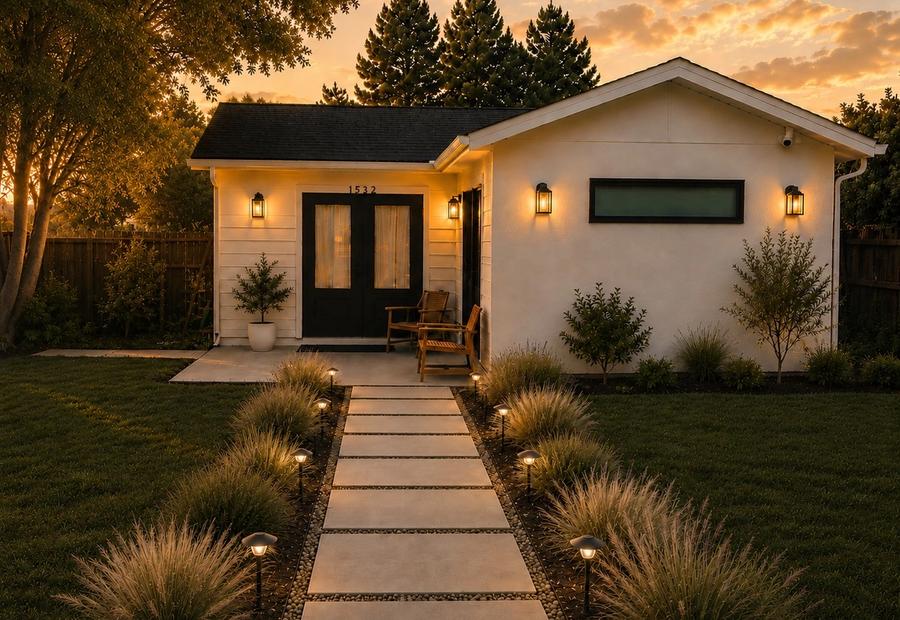
Ask homeowners what stops them from building an ADU and "money" is rarely the real answer. The real answer is the fog: the worry about permitting, the fear of cost overruns, the sense that there's a maze ahead and no map. So here's the map. Laid out in order, the process is a path — and a fairly predictable one.
Stage 1 — Discovery & feasibility
Everything starts with a simple question: what can this lot actually support, and what do you want it to do? This stage is a relaxed conversation plus a review of your property — zoning, setbacks, utility locations, and your goals and budget. The output is clarity: whether an ADU pencils out for you, roughly what size and type fits, and what it's likely to cost.
- What you decide here: detached vs. attached vs. conversion; rough size; target budget.
- Typical timeline: 1–2 weeks.
Stage 2 — Concept design
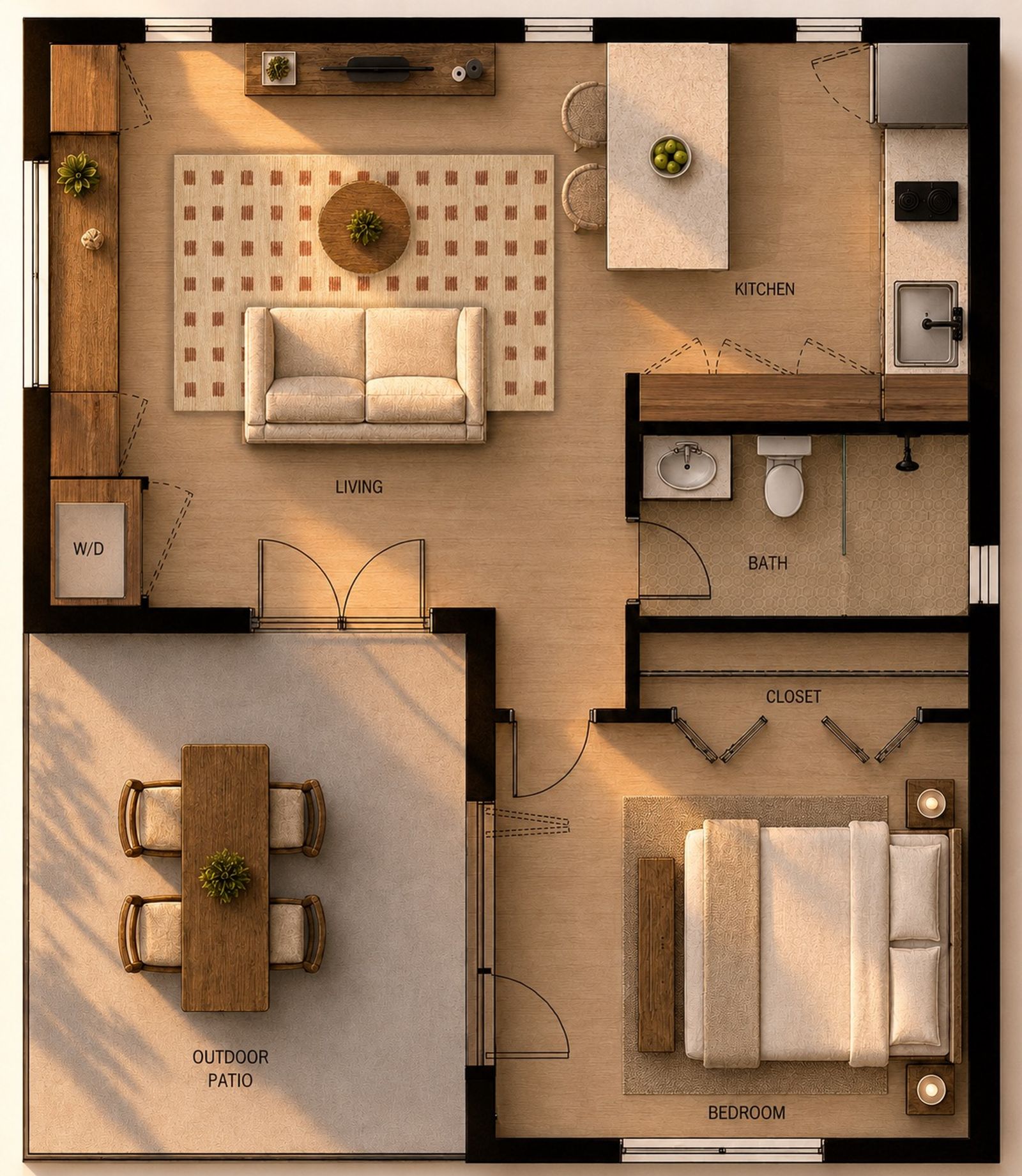
Now the unit starts to take shape. We translate your goals into a floor plan and massing — where the light comes in, how the kitchen flows into the living space, where the entrance sits, how it relates to the main house and the yard. This is the most creative stage and the one where small moves pay off for the life of the building. You'll review, react, and refine until the plan feels right.
- What you decide here: the layout, the feel, the relationship to your existing home and yard.
- Typical timeline: 2–4 weeks.
Stage 3 — Design development
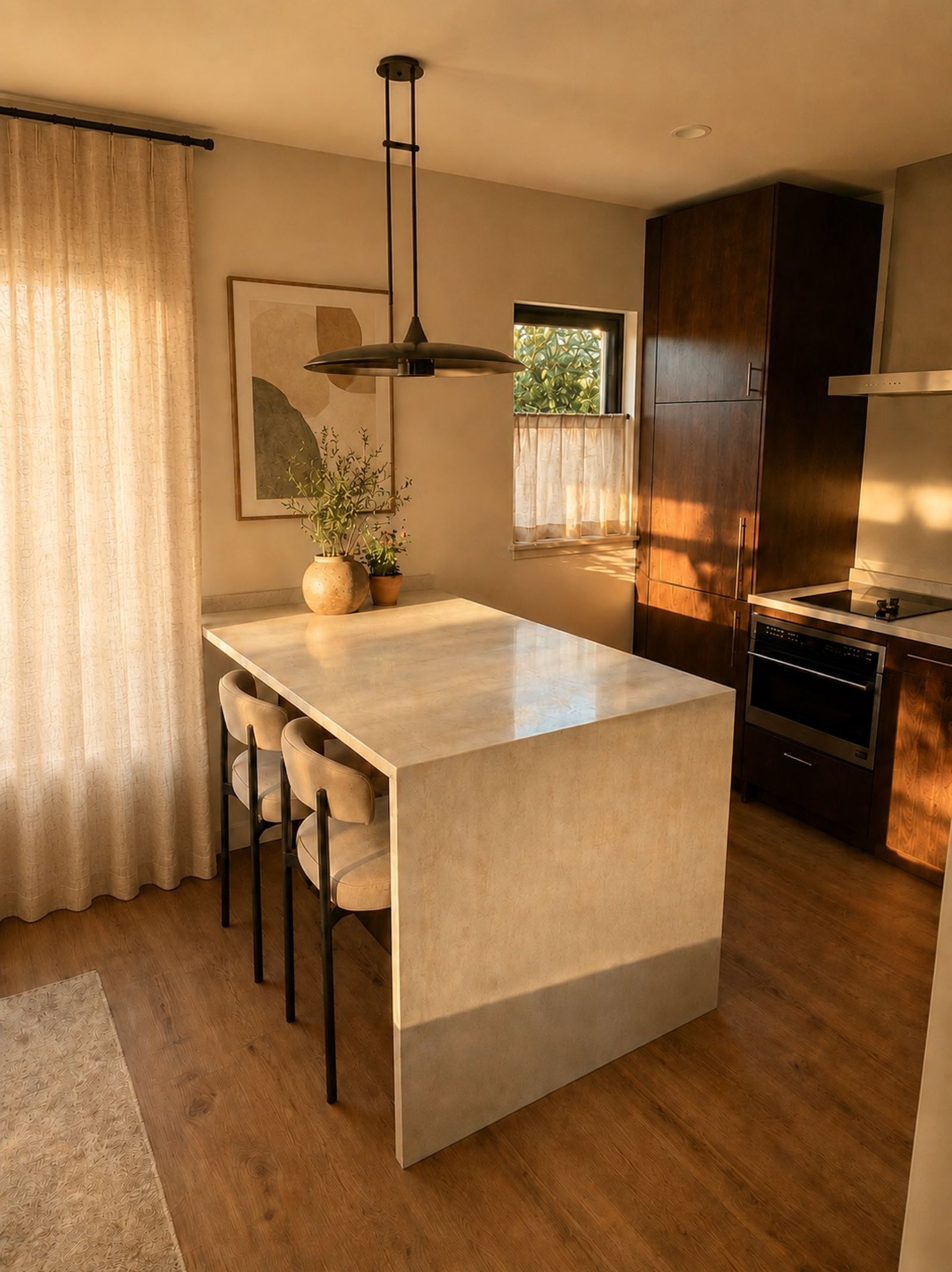
The concept becomes a resolved design. Dimensions get nailed down, materials get chosen, and the details that make a small home feel considered — ceiling heights, window placement, storage, finishes — get worked out. By the end of this stage you know exactly what you're building and roughly what it costs, before any permit drawings are produced.
- What you decide here: materials, finishes, fixtures, and the final footprint.
- Typical timeline: 3–5 weeks.
Stage 4 — Permit-ready drawings
This is the stage that intimidates people, and it shouldn't. The resolved design is turned into the full technical set a city needs: architectural drawings, structural engineering, and energy compliance (Title 24 in California). The package is submitted to your jurisdiction, which reviews it — "plan check" — and usually returns comments. Addressing those comments is normal and expected; it's a conversation, not a verdict. Statewide ADU laws have put real limits on how long cities can take and what they can demand, which has made this stage far more predictable than it was a few years ago.
- What happens here: submittal, plan check, corrections, and approval.
- Typical timeline: 4–12 weeks, depending on your city and whether a pre-approved plan is used.
The pre-approved plan shortcut
Many California cities now maintain libraries of pre-approved ADU plans that clear permitting far faster. If a standard plan fits your lot and your goals, it can shave weeks off the timeline. If you want something tailored to your property, a custom design is worth the modest extra time — it's a building you'll live with for decades.
Stage 5 — Construction
With permits in hand, your contractor breaks ground. The build moves through a familiar sequence: site prep and foundation, framing, the rough-in of plumbing and electrical and HVAC, inspections at each milestone, then insulation, drywall, finishes, and the final touches. The city inspects along the way and issues a certificate of occupancy at the end — the moment your ADU legally becomes a home someone can live in.
- What happens here: foundation → framing → systems → finishes → final inspection.
- Typical timeline: 4–8 months for a detached new build; less for a conversion.
How long does the whole thing take?
Start to finish, a custom detached ADU commonly runs 9 to 14 months — a few months of design and permitting, then the construction itself. Conversions and pre-approved plans land at the faster end. Knowing the shape of the timeline is half the battle; it turns an open-ended worry into a schedule you can plan around.
The process at a glance
| Stage | What it produces | Rough timeline |
|---|---|---|
| Discovery & feasibility | A clear go / no-go and budget | 1–2 weeks |
| Concept design | Floor plan and massing | 2–4 weeks |
| Design development | A resolved, costed design | 3–5 weeks |
| Permit-ready drawings | Approved permit set | 4–12 weeks |
| Construction | A finished, occupiable home | 4–8 months |
Design should feel exciting, not overwhelming. The same clear path guides every ADU we draw — so you always know where you are and what's next.
The thing to remember is that you don't navigate this alone, and you don't decide everything at once. Each stage hands you a small, clear set of decisions and a clear next step. That's what turns a maze into a path — and a someday idea into a building in your backyard.