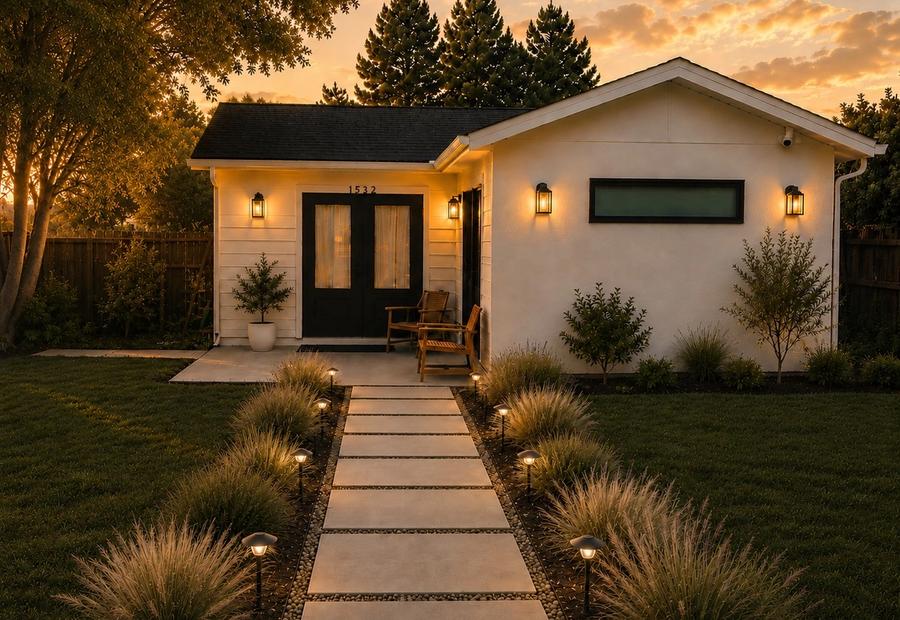
An illustrative project
This walkthrough is a representative example assembled to show how we work and the kind of thinking that goes into a small home. Details have been generalized; it's here to illustrate process, not to identify a specific client.
Most backyard ADUs start the same way: a homeowner with a clear need, a lot that's a little tighter than they'd like, and a wishlist that, on paper, seems too big for the space. The work of design is reconciling those three things — and a well-resolved small home is almost always the result of a few good decisions made early. Here's how one detached ADU came together.
The brief
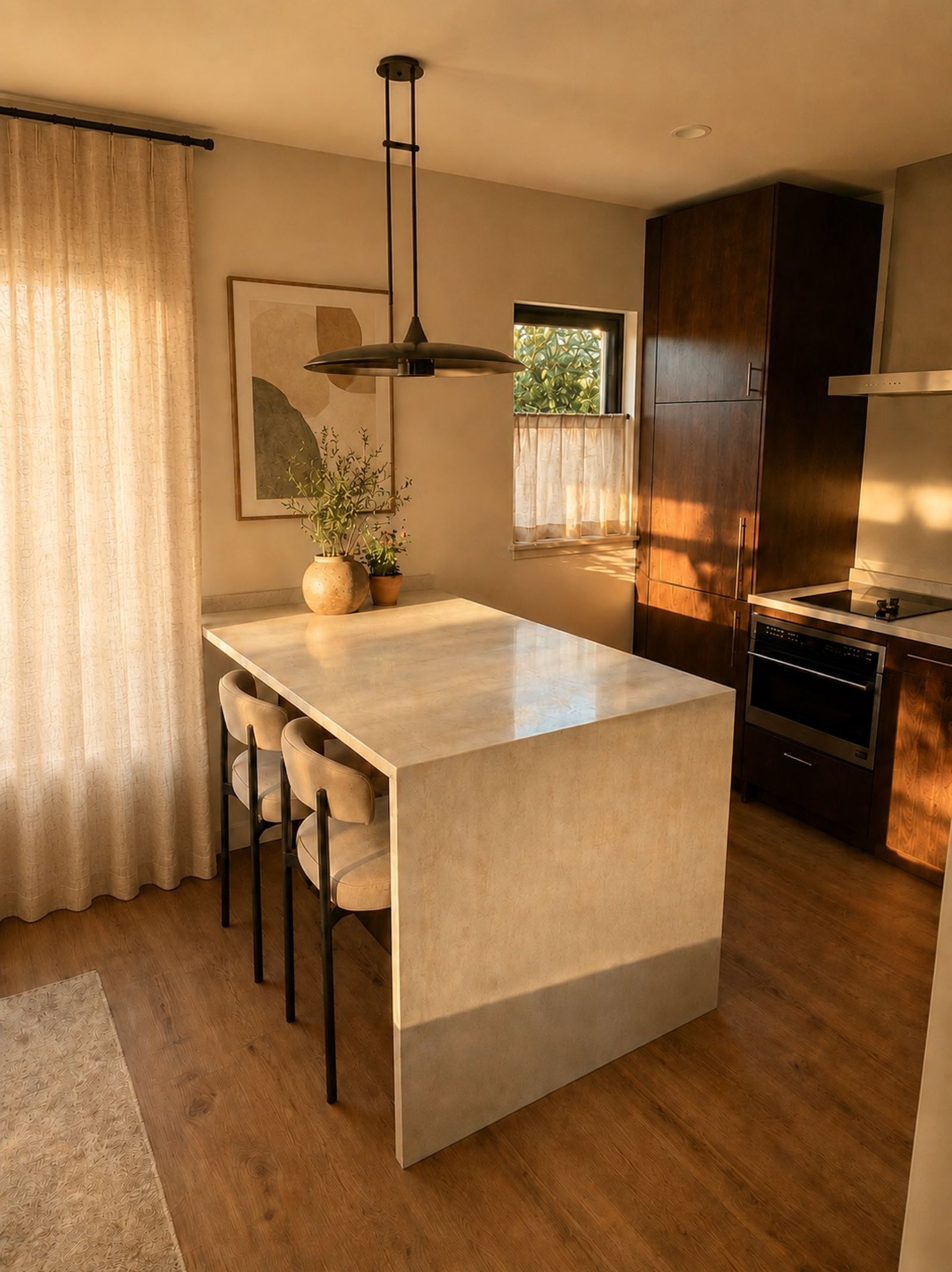
The owners wanted a true one-bedroom home in the backyard — somewhere a parent could live independently now, and a rental that would hold its value later. It had to feel like a real house, not a shed with a kitchenette: full bath, a kitchen worth cooking in, a bedroom that fit a real bed and a closet, and enough light that it never felt like a back-lot afterthought.
The lot constraints
The lot set the terms, as it always does. Setbacks pinned the buildable footprint to a modest rectangle near the rear of the property, the existing utility connections sat closer to the house than to the build site, and a mature tree the owners wanted to keep ruled out one whole corner. None of these are unusual — they're the normal puzzle of building in an established Orlando neighborhood — but together they decided the shape of the home before a single interior wall was drawn.
The design moves
A small home lives or dies on a handful of decisions. Three did most of the work here:
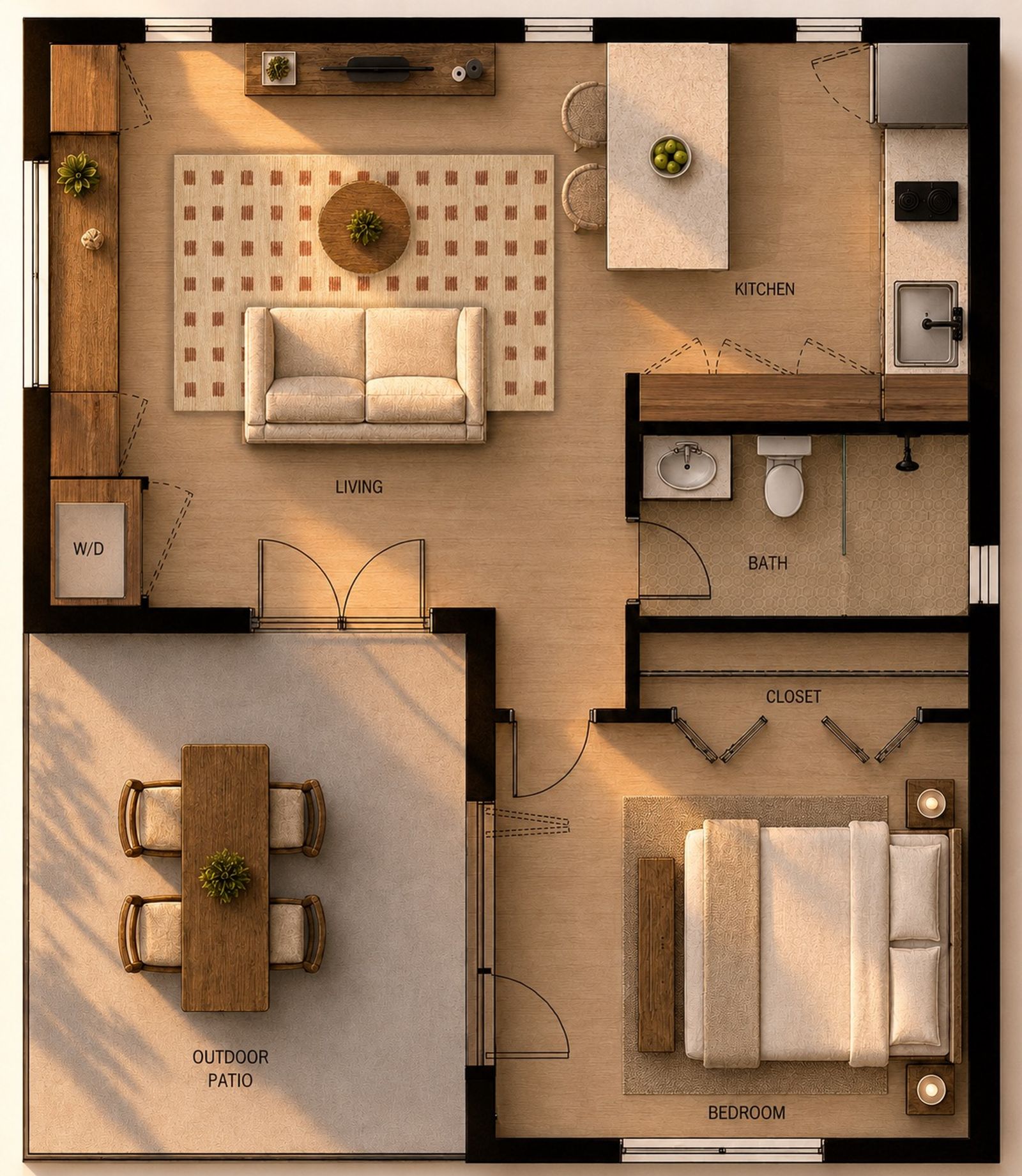
- Stack the wet rooms. Putting the kitchen and bath on a shared plumbing wall kept utility runs short — which trimmed both cost and the distance to the existing connections.
- Borrow height and light. A raised ceiling over the living area and well-placed windows made roughly 640 square feet read as open and calm rather than tight, without adding footprint.
- Turn the entry toward the yard. Orienting the door and a covered edge toward a private slice of the yard gave the unit its own sense of arrival, separate from the main house — the thing that makes a rental feel like a home.
What the permit set delivered
The project left our desk as a complete, permit-ready package: dimensioned floor plans, exterior elevations, the building sections and details a contractor builds from, and coordinated structural engineering stamped to Florida Building Code — the document the jurisdiction needs to issue a permit. The owners walked into their contractor conversations with a resolved design and a realistic budget, instead of a sketch and a hope.
A small building, designed with intention, can be the best room on the property. That's the whole idea behind every project we draw.
Every lot is different, and yours will have its own version of the tree in the corner. But the process is the same: understand what the lot and the code allow, make a few good decisions early, and design the small home with the same care a big one would get. If you're picturing something similar in your own backyard, that's exactly where we start.