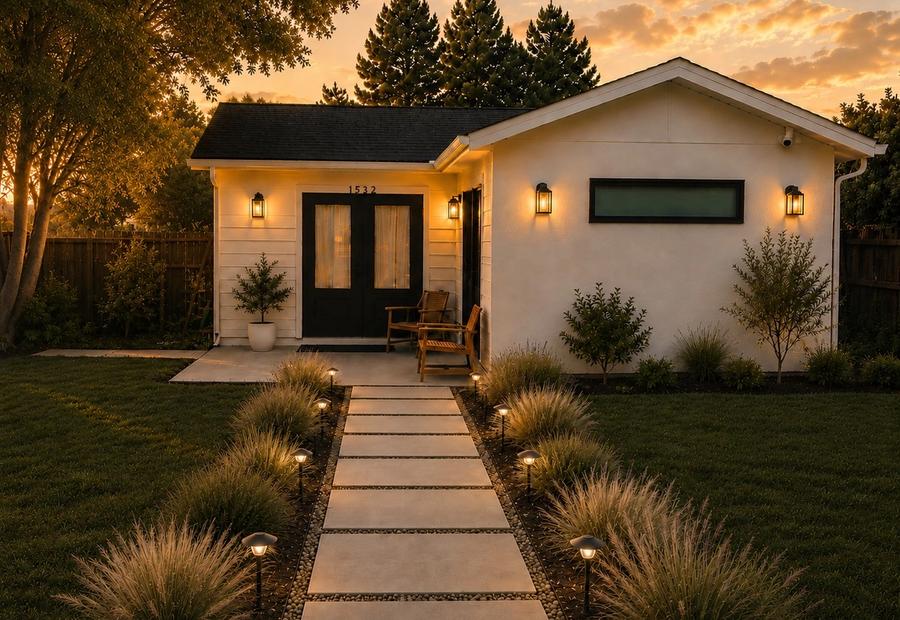
The single thing that stops most Orlando homeowners from building an ADU isn't money — it's not knowing whether they're even allowed to. The rules sound complicated, they vary depending on whether you're inside the City of Orlando or in unincorporated Orange County, and they've genuinely changed in the last couple of years. So here's the current picture, in plain language, with the caveats that actually matter.
Rules change — confirm before you commit
This is an overview to help you plan, not legal advice. ADU codes are evolving fast in Central Florida, and the specifics depend on your exact parcel, zoning district, and overlay. We confirm the rules for your specific lot as the first step of every project — that's what a feasibility review is for.
City of Orlando vs. Orange County
The first question is which set of rules applies to you, and that comes down to a single fact: is your address inside the City of Orlando limits, or in unincorporated Orange County? They are separate jurisdictions with separate codes. A property in Baldwin Park or College Park plays by City of Orlando rules; a property in an unincorporated pocket near Conway or Pine Hills answers to Orange County. Plenty of addresses that feel "Orlando" are actually in the county, so this is worth confirming before anything else.
Where ADUs are allowed
Both jurisdictions now permit accessory dwelling units on many single-family lots, but allowance is tied to your zoning district and lot size, and some neighborhoods carry overlays or historic-district rules that change what's possible. The trend across Central Florida has been toward making ADUs easier — Florida's statewide push to add housing has nudged local governments to open up — but "easier" is not "by right everywhere." Your zoning designation is the deciding factor.
The size limits
ADUs are, by definition, secondary to the main house, and the codes enforce that with a size cap. As a general rule of thumb in the Orlando area, an ADU is limited to roughly 40% of the primary home's living area, up to a ceiling commonly set around 1,200 square feet. Smaller lots and certain districts cap it lower. In practice this means an ADU is a one- or two-bedroom home, not a second full-sized house — which is exactly the scale where thoughtful design pays off most.
Typical ADU parameters in the Orlando area (confirm for your parcel)
| Parameter | Typical rule of thumb |
|---|---|
| Max size | ~40% of main home, up to ~1,200 ft² |
| Bedrooms | Usually 1–2 |
| Setbacks | Must meet rear/side yard setbacks for your district |
| Owner occupancy | Often required on the property (see below) |
| Parking | May require one additional space, varies by district |
The owner-occupancy rule
This is the rule that surprises people, so it's worth stating plainly: in much of the Orlando area, you're expected to live on the property — in either the main house or the ADU — if a unit is being used as a rental. Orange County in particular has historically required owner-occupancy of the primary residence. The practical upshot is that ADUs here are largely an owner's tool: a rental in your own backyard, a place for family, or a suite you grow into — not a way for an absentee investor to stack units. For most homeowners that's exactly the use anyway.
Setbacks, height, and the backyard fit
Beyond size, your lot's setbacks (how far a structure must sit from the property lines), height limits, and lot-coverage rules shape where an ADU can physically go. On a typical Orlando lot this is the real design puzzle: fitting a comfortable unit into the buildable envelope while keeping the yard usable, the light good, and the relationship to the main house graceful. It's solvable on most lots — but it's the part where early design thinking saves money, because it determines the footprint everything else is built on.
Who is allowed to draw the plans
Florida is strict about this, and it matters: construction plans submitted for permit must be prepared by a Florida-licensed Professional Engineer or Registered Architect, in accordance with the Florida Building Code. A sketch off the internet won't be accepted, and neither will a DIY drawing. Every Rivas Haus permit set is produced to that standard and coordinated with licensed engineering, so the package your contractor submits is one the city can actually approve.
The pre-approved plan shortcut
The City of Orlando has been developing a library of pre-approved ADU plans — designs already vetted for code compliance that any homeowner can use to streamline permitting. If a standard plan happens to fit your lot and goals, it can shorten review. If you want a unit shaped around your specific property, a custom design is worth the modest extra time — it's a building you'll live with for decades.
The incentive worth knowing about
In early 2026, Orlando moved to offer homeowners up to $10,000 to build backyard apartments and rent them as workforce housing — part of a broader effort to add attainable housing across the city. Programs like this come with conditions (typically around renting the unit at certain rates for a period of time), and the details evolve, but the direction is clear: the city wants more well-built ADUs, and it's increasingly willing to help pay for them. If income potential is part of your motivation, it's worth checking what's currently available before you start.
So — can you build one?
For a large share of Orlando-area homeowners, the answer is yes, with the size and placement shaped by your zoning, your lot, and the setbacks. The only way to know for sure is to check your specific parcel: its jurisdiction, its zoning, its buildable envelope, and any overlay. That's a quick piece of homework — and it's exactly where every good ADU project starts.
The rules are not the obstacle people fear. On most Orlando lots an ADU is allowed — the real work is designing the best possible home inside what the lot and the code will give you.
Find out what your lot allows
We'll check your jurisdiction, zoning, setbacks, and buildable size, and come back with a clear read on what you can build — and what it's likely to cost. It's the free first step of every project.